
Desk lamp or floor lamp: choosing the arrangement for your workspace
Choose the mounting arrangement first, then confirm the lighting and control requirements for that position.
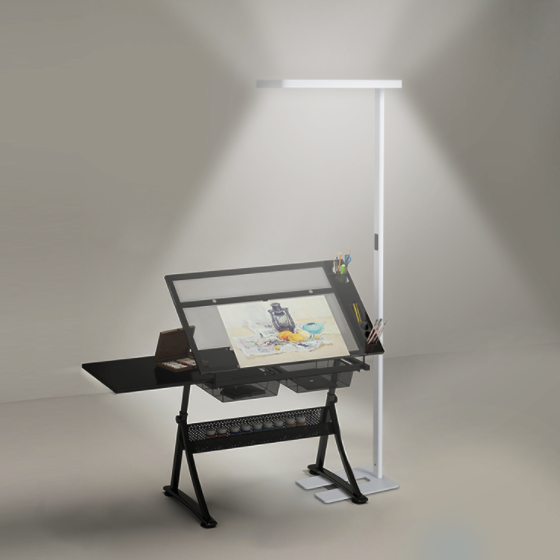
A desk lamp and a freestanding floor lamp can both be considered when planning a workstation, but they occupy different parts of the room. The practical choice begins with the furniture, the task and the space available for mounting. Product names alone are not enough to make that decision.
1. Check the space you can use
Identify the clear worktop area and any desk edge available for an approved attachment. Also review floor space beside or behind the workstation, including chairs, storage and circulation. Do this with the furniture in its intended position.
Compare how each proposed arrangement affects everyday use. A desk-mounted option needs a suitable mounting location; a freestanding option needs a suitable base position and cable route. Ask for dimensions and mounting conditions for the exact products under consideration.
2. Define the area the light must serve
Describe whether the requirement concerns one person’s document area, a larger table or a shared arrangement. Include screens and the normal seated viewing directions. Request the appropriate distribution information or project assessment where the brief calls for it.
Do not infer coverage solely from the size of the lamp head or its mounting category. Review each sample at the proposed position with the task materials in place. Compare the result alongside existing room lighting and daylight.
3. Compare the adjustments users need
List physical movement, brightness adjustment and any colour-temperature requirement separately. Confirm which functions are present on each proposed configuration. A lamp supplied in several fixed versions is different from one that lets the user change a setting.
Check control access from the normal seat. Where several people use the workstation, ask them to repeat the adjustment process and return to a useful starting state. Consider the entire arrangement, including the reach around screens and partitions.
4. Identify the model beyond its name
Record the model reference, mounting option, finish, light specification and controls. Ask the supplier to resolve any mismatch between a product name, image and description before comparing offers. Keep accessories and optional features clearly identified.
Supporting documents should refer to the selected configuration. Do not assume a stated lifetime, charging function or automatic feature applies merely because another lamp has a similar name or appearance. Include any evidence still required in the enquiry.
5. Review the preferred arrangement at the desk
Try the proposed position with normal work and movement around the desk. Check clearances, cable routing, reflections and switching. Record any changes to the brief before agreeing the sample, so installation follows the arrangement that was actually reviewed.
Keep the approved mounting and settings with the order. If the furniture layout changes later, that record helps identify what needs to be reviewed again. The decision remains tied to the workspace rather than to a broad lamp category.
A useful enquiry checklist
Prepare these details before discussing the proposed configuration:
- Worktop, mounting-edge and floor-space constraints
- Task area, screens and neighbouring users
- Product dimensions and proposed mounting position
- Required movement, dimming and colour-temperature behaviour
- Exact model, accessories and supporting documents
- A sample trial with the final furniture arrangement
Choose the arrangement that fits the brief
Compare desk-mounted and freestanding options using the same tasks and viewing positions. Once a suitable arrangement is clear, confirm its exact configuration and installation requirements.
Review additional functions separately with smart desk-lamp selection or floor-lamp controls. A multifunction description does not make the two physical formats interchangeable.