
Smart desk lamps: turning features into a specification
Translate a long feature list into a configuration that purchasing, users and the supplier can all identify.
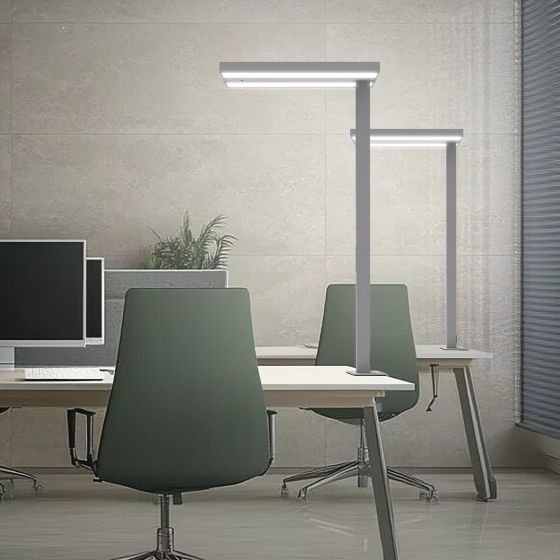
Two lamps described as smart may solve different problems. One may offer local dimming and a sensor; another may depend on an app or network connection. Before comparing models, define the functions your workplace needs and the practical conditions under which they must operate.
1. Write the workstation brief first
Record desk dimensions, screen positions, available mounting space and cable routes. Identify whether desks belong to one person or change users during the day. Include the people responsible for installation and support, not only the person selecting the lamp.
Describe a small set of use cases: arriving at the desk, changing the task, leaving temporarily and returning after power has been interrupted. These scenarios give the specification a practical foundation and help separate essential functions from optional ones.
2. Select a suitable physical arrangement
Compare bases, clamps and other offered mounting methods against the actual furniture. Check clearances around screens, partitions and moving desk parts. Ask the supplier to confirm suitability for the proposed mounting surface rather than assuming every accessory fits.
Review the head position and adjustment range with the task materials in place. The lamp’s finish and proportions should also be considered alongside the workspace, but a matching appearance does not establish that the selected mounting or lighting configuration is appropriate.
3. List each function separately
Use distinct lines for switching, dimming, adjustable colour temperature, sensing and any connected function. For each, record whether it is required, optional or not needed. Ask which exact model or option supplies it and how it is operated.
Define what happens when functions interact. For example, ask whether a manual adjustment overrides an automatic setting and when that override ends. A named mode should have an agreed behaviour. For the everyday control trial, use the separate guide to smart desk-lamp controls.
4. Confirm the setup and support requirements
If connectivity is required, ask for the supported connection method, any gateway or account requirement and the setup instructions for the proposed version. Have the responsible team review these before choosing the option. Do not assume compatibility from the word smart.
Ask which controls remain available without the connection and how the lamp is reset or transferred to another user. Clarify who will maintain any app or configuration and what support information accompanies the product. Record unresolved compatibility questions before sample approval.
5. Turn the specification into a sample test
Order the same combination of mounting, light specification and controls that is being considered for purchase. Identify the sample and test each required function using the agreed scenarios. Record the result, any revised requirement and the person responsible for closing an open point.
Compare the final quotation and technical documents against the approved configuration. If a feature or component changes, revisit the checks it affects. A short, specific acceptance record is more useful than a long list of features that nobody has tested together.
A useful enquiry checklist
Prepare these details before discussing the proposed configuration:
- Desk arrangement and approved mounting method
- Light specification and required technical information
- Required, optional and excluded control functions
- Override, memory and power-recovery behaviour
- Connection, account and support requirements if applicable
- Identified sample and function-by-function acceptance record
Purchase the configuration you tested
Keep the feature schedule, sample result and quotation aligned. This makes the intended behaviour clear without assuming that every model in a product family has the same capabilities.