
Product selection
Should Online Retailers Add Adjustable Up/Down Desk Lamps?
Evaluate how the light reaches different tasks, how it serves the surrounding space, and whether those functions fit your customers’ desks.
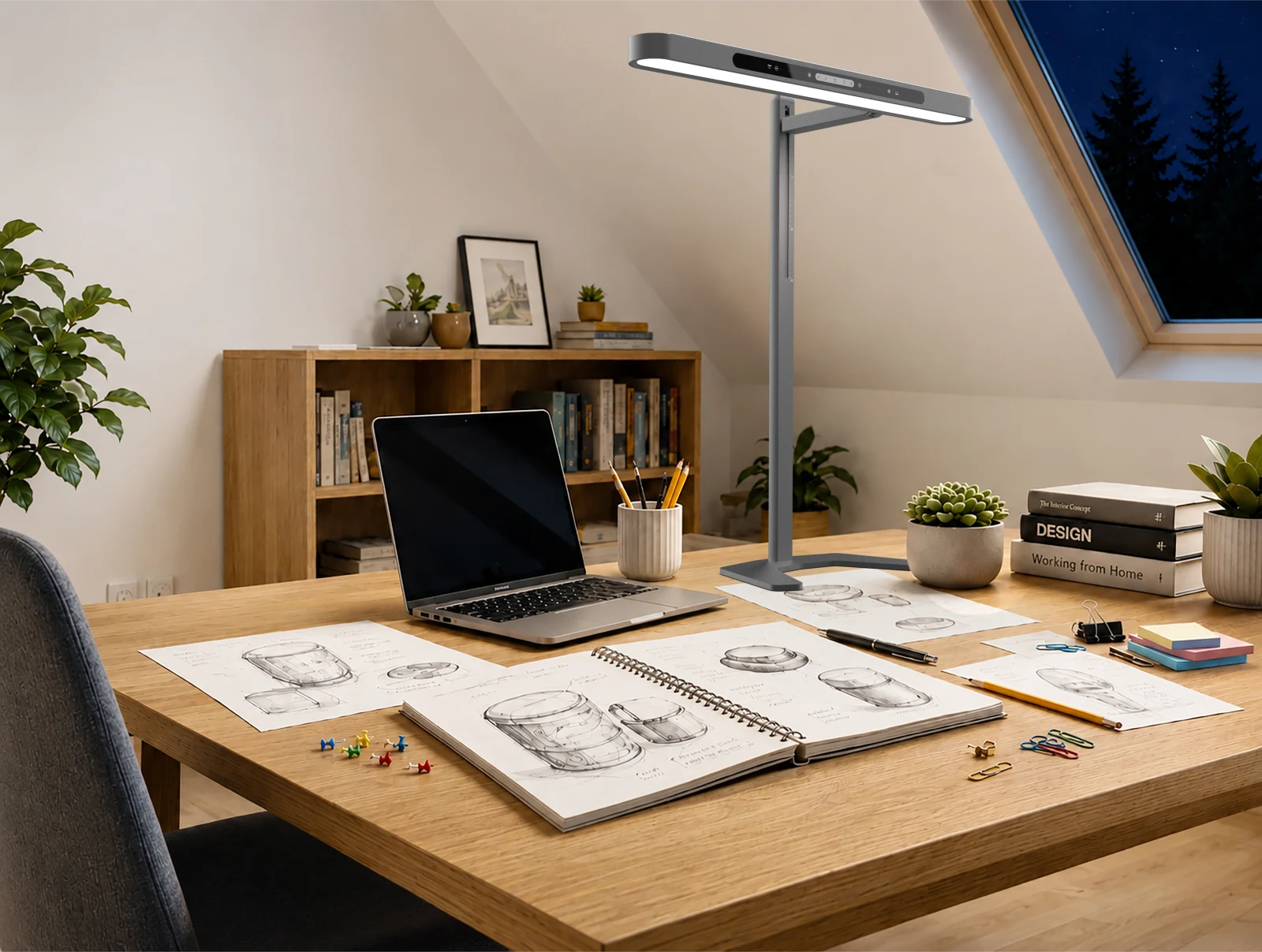
An adjustable up/down desk lamp is worth shortlisting when your customers move between tasks across a desk and want both working-surface light and ambient light around it. Look for useful head reach, height and tilt adjustment, then assess the physical fit, sample performance and commercial terms before adding stock.
Start with the tasks your customers move between
A home-office or professional desk may hold a laptop, documents to one side and a notebook closer to the user. The task position changes even though the desk stays the same. For an online lighting retailer, that creates a practical question: can the shopper place light where the next task happens?
Review the desk arrangements and requests you already encounter. Customers who regularly switch between screen work, reading, writing and drawing may have a reason to value physical adjustment. A customer lighting one fixed reading spot may have different priorities. Identify the need before deciding where this format belongs in your collection.
Assess left-right and forward-backward head movement
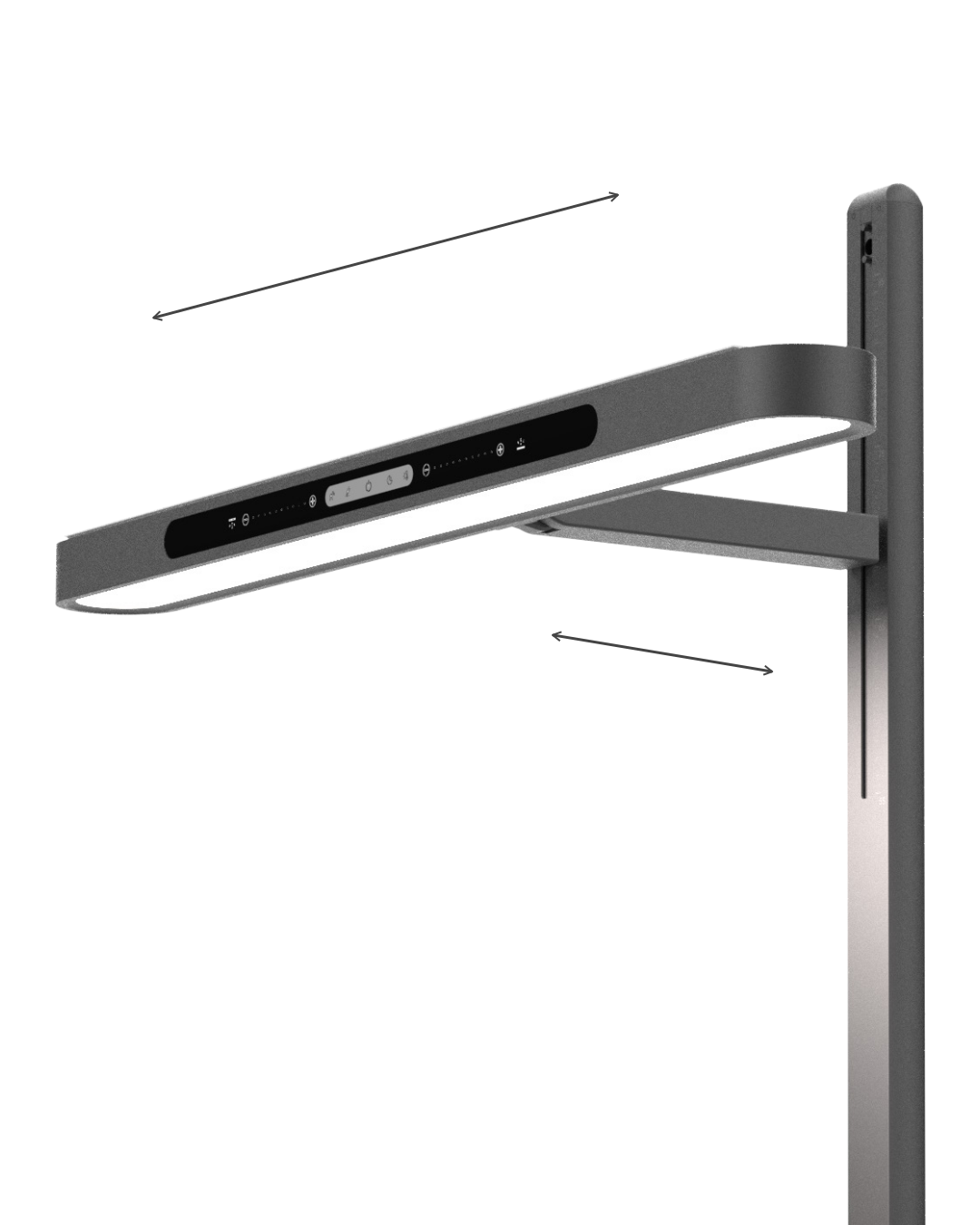
The desktop design shown here lets the head move left and right, forwards and backwards, while the base stays in place. This gives the user more reachable light positions across the working area. Documents beside a keyboard and a notebook further forward provide two simple positions to demonstrate.
Check that movement with a sample on a representative desk. The useful question is whether the head reaches the customer’s task positions without interfering with screens or shelving. Adjustable reach describes the positions available as the head moves; it does not establish that a larger desk area is illuminated uniformly at one time. Any numerical coverage claim needs matching measurements.
Use height and tilt for finer positioning
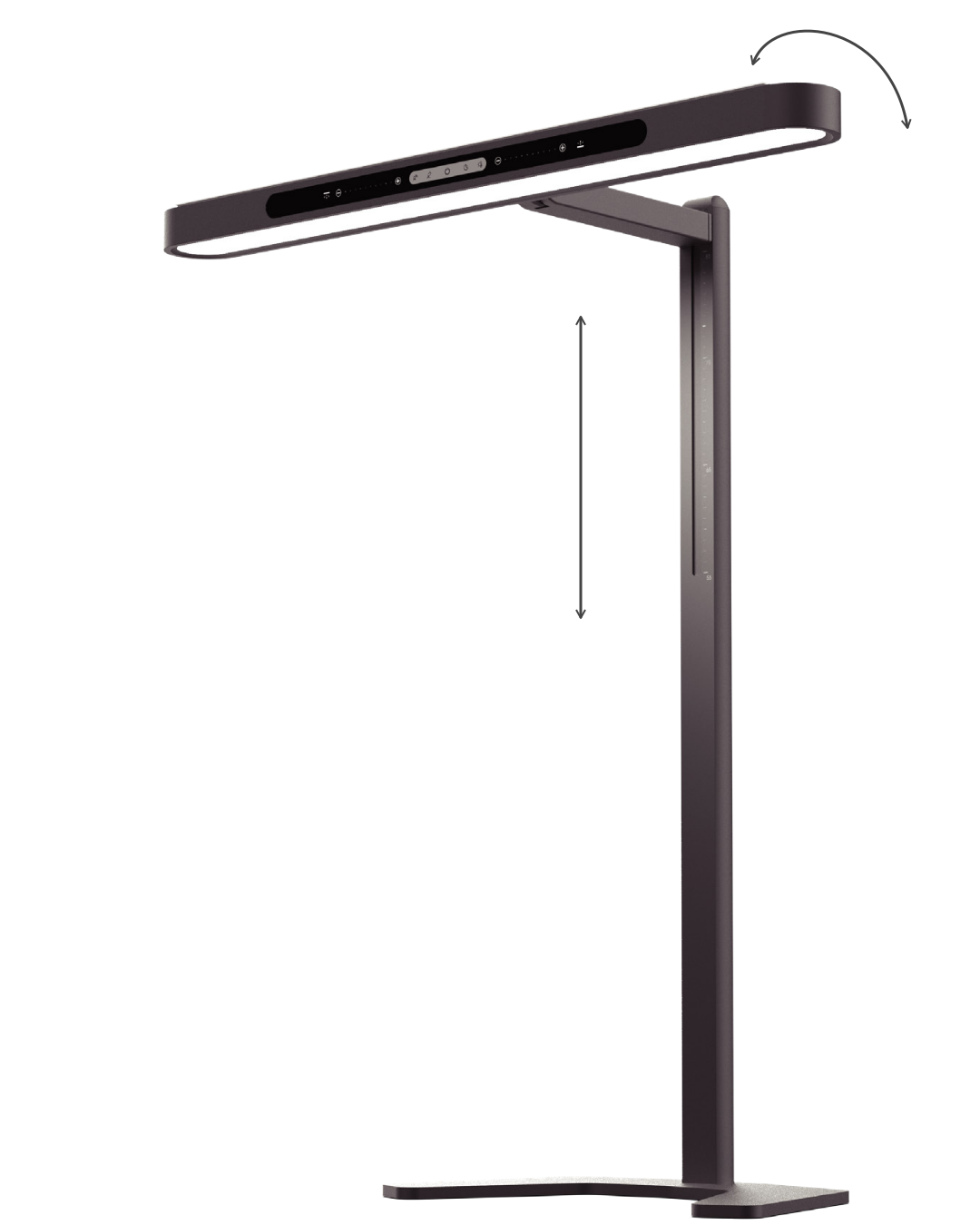
Once the head reaches the task area, vertical adjustment and tilt allow further changes to its position and direction. These are separate functions from upward and downward light emission. Show them clearly so shoppers understand both the mechanical adjustment and the two lighting roles.
In a demonstration, adjust the height and angle for a document, a notebook and the usual seated screen position. Observe the light on the work surface and reflections from that position. Changing height or tilt can change the lighting result, so evaluate the actual arrangement instead of assuming every setting will suit every task. Record the dimensions and adjustment limits for the offered configuration.
Evaluate task light and ambient light together
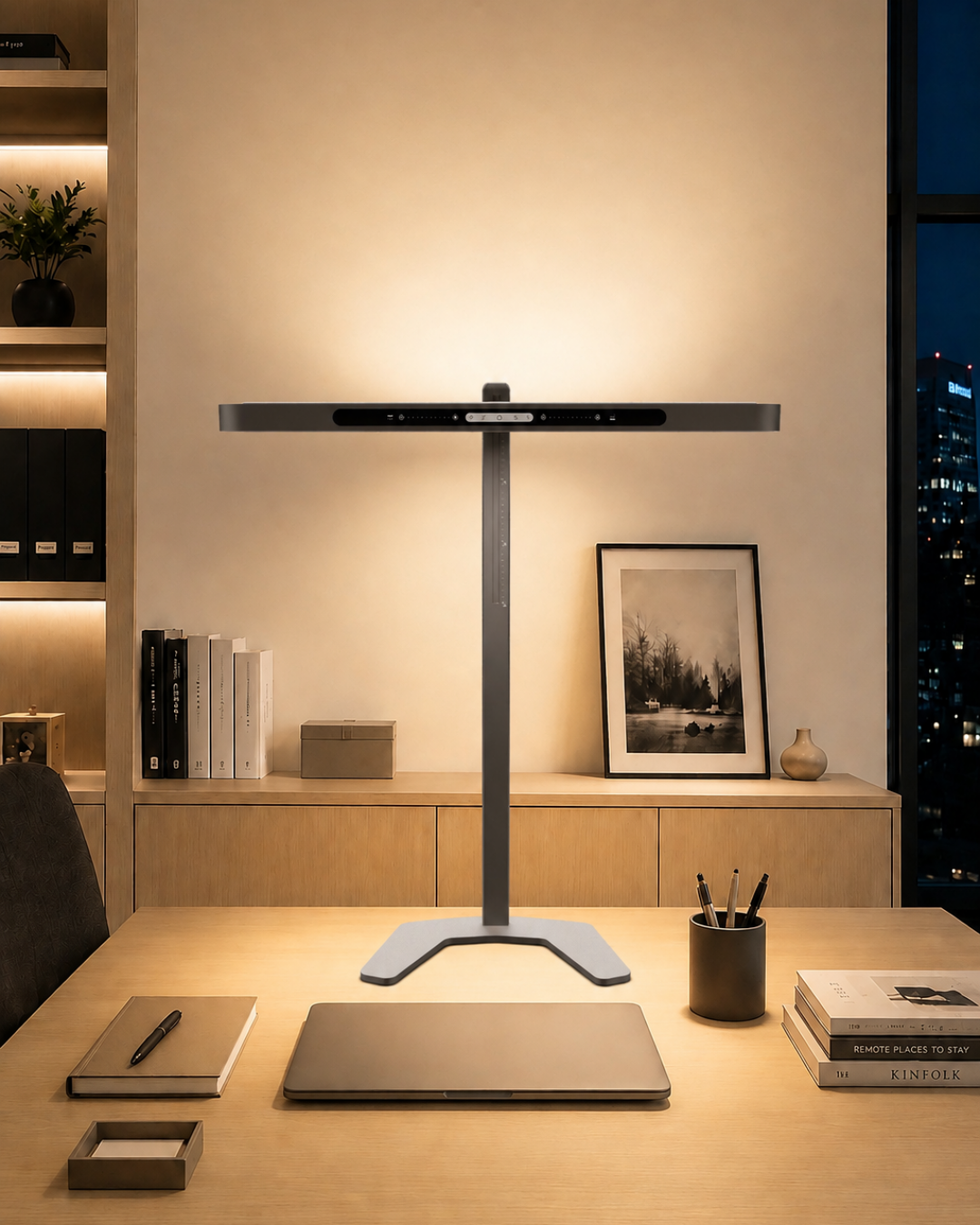
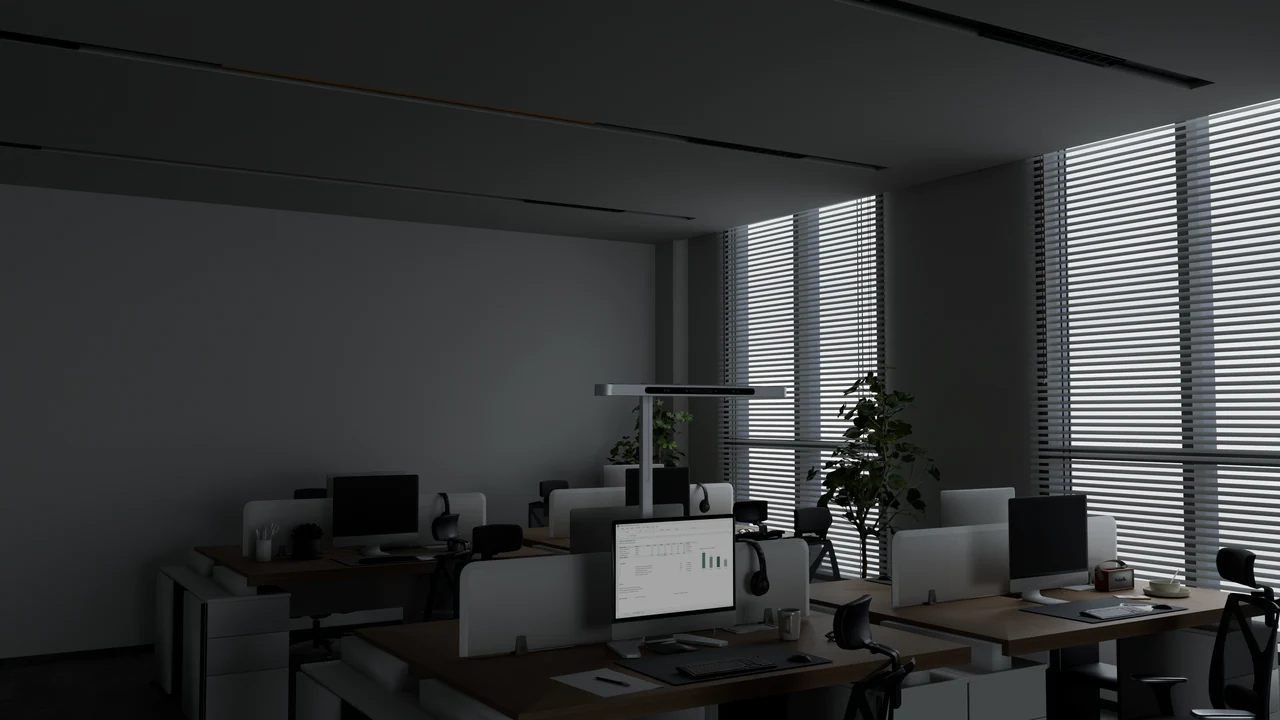
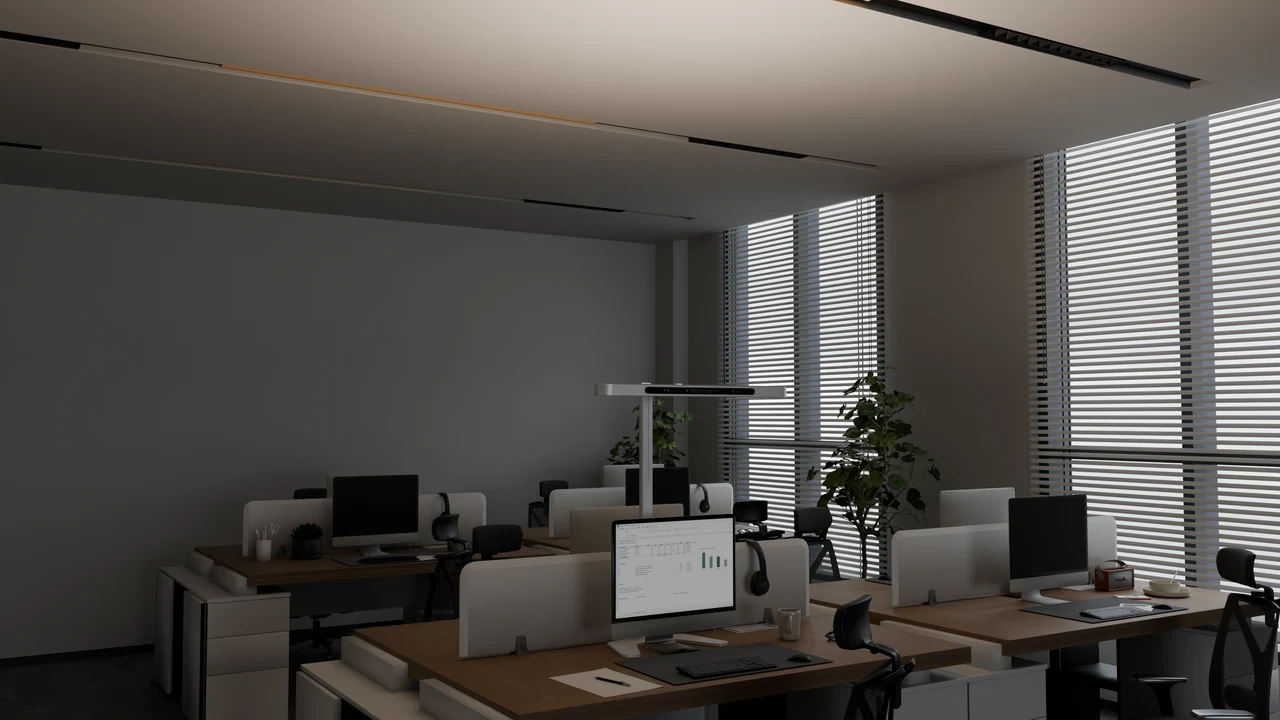
The downward component lights the working surface. The upward component directs light towards surrounding room surfaces, contributing to ambient illumination around the desk. Independent upper/lower dimming lets the user adjust their balance alongside the head position.
Assess the upward contribution in the kind of room your customers use. Ceiling height, finishes, nearby shelving and existing lighting influence the result. Show the lamp in a representative workspace, with the upward light path visible. Explain how it works alongside the room’s existing lighting so shoppers can judge its role at their own desk.
Decide whether the combination fills a range need
Shortlist the product if your customers use several task positions, want both lighting roles and have space for the base and moving head. Compare those needs with what your existing desk lamps already offer. The reason to add a model should be a useful choice your team can explain and demonstrate.
It may be a lower priority for customers seeking a compact portable reading light, a single fixed lighting position or the lowest purchase price. A crowded desk or obstructed upward light path also calls for closer assessment. Then compare the supplier’s quotation, landed cost, packaging, delivery and after-sales arrangements with your target retail price. Confirm that the planned retail offer can support those costs and the service you intend to provide.
Review a sample through the customer’s task sequence
Set up the lamp with a typical screen, documents and notebook. Move the head sideways and forwards or backwards between those positions. Adjust height and tilt, then compare downward, upward and combined light settings. Check clearance, reflections, base footprint, cable routing and how easily the adjustments hold their chosen position during ordinary use. For larger desks, include the furthest document position in the review instead of testing only directly below the head.
For the online listing, show the complete lamp, both light directions and the relevant mechanical adjustments. State dimensions, adjustment limits, included equipment and available configuration accurately. Keep the selected sample and its specification together so the version your team evaluates is the one shoppers receive.
Buyer questions
Does “up/down” mean the head moves vertically?
In this article, up/down describes the two light-emission directions. Vertical head adjustment is a separate mechanical function. The product combines both, alongside left-right movement, forward-backward movement and tilt.
Does adjustable reach mean the whole desk has the same illuminance?
No. It describes the task positions the head can reach. Illuminance and uniformity depend on the setting and arrangement and need appropriate measurements for any numerical claim.
What should a retailer share when discussing a sample?
Share the typical desk dimensions, screen arrangement, task positions, target market and role the lamp should fill in your collection. These details help define a useful configuration and sample evaluation.
BILLIONAIRE LIGHTING manufactures office lighting. Share your customers’ typical desk setup with our team to discuss an adjustable up/down desktop configuration and sample evaluation.